
R&D portfolio
Please explore a selection of results from our R&D projects. All data and images featured on this site are original results obtained during the design, testing, or commissioning of our systems. While these illustrations do not reveal proprietary internal details, they demonstrate the high level of quality and expertise we deliver. Feel free to contact us to discuss how our expertise can resolve your specific laser challenges.
Stretchers and compressors for femtosecond CPA lasers
Stretchers and compressors play crucial role in dispersion management in chirped pulse amplification (CPA). The most advanced technique to design a stretcher is ray tracing. Numerical ray tracing allows not just finding a solution with desired dispersions (GDD, TOD, and FOD), but also can optimize the solution in terms residual angular chirp and spatial dispersion, as well as alignment tolerances. In some cases, the intrinsic aberrations of a stretcher can be partially compensated by intentional precalculated misalignment of its optical path. In ultrafast lasers, stretchers and compressors typically employ large-aperture optics that must be of high quality in terms of both surface flatness and roughness for sub-50 fs systems. The influence of such imperfection of stretcher optics can also be analyzed with numerical ray-tracing models. E.g. a wavefront distortion from a real substrate (mirror or grating) characterized via the Foucault knife-edge test, can be imported in the numerical model to predict the resulted decrease in the peak power at the output of the CPA system. Furthermore, ray-tracing allows designing custom unconventional dispersive systems such as grism-based stretchers or compressors.
Whether your system requires specific values of GDD, TOD, and FOD, we can design a custom stretcher or compressor tailored to your arbitrary dispersion profile.
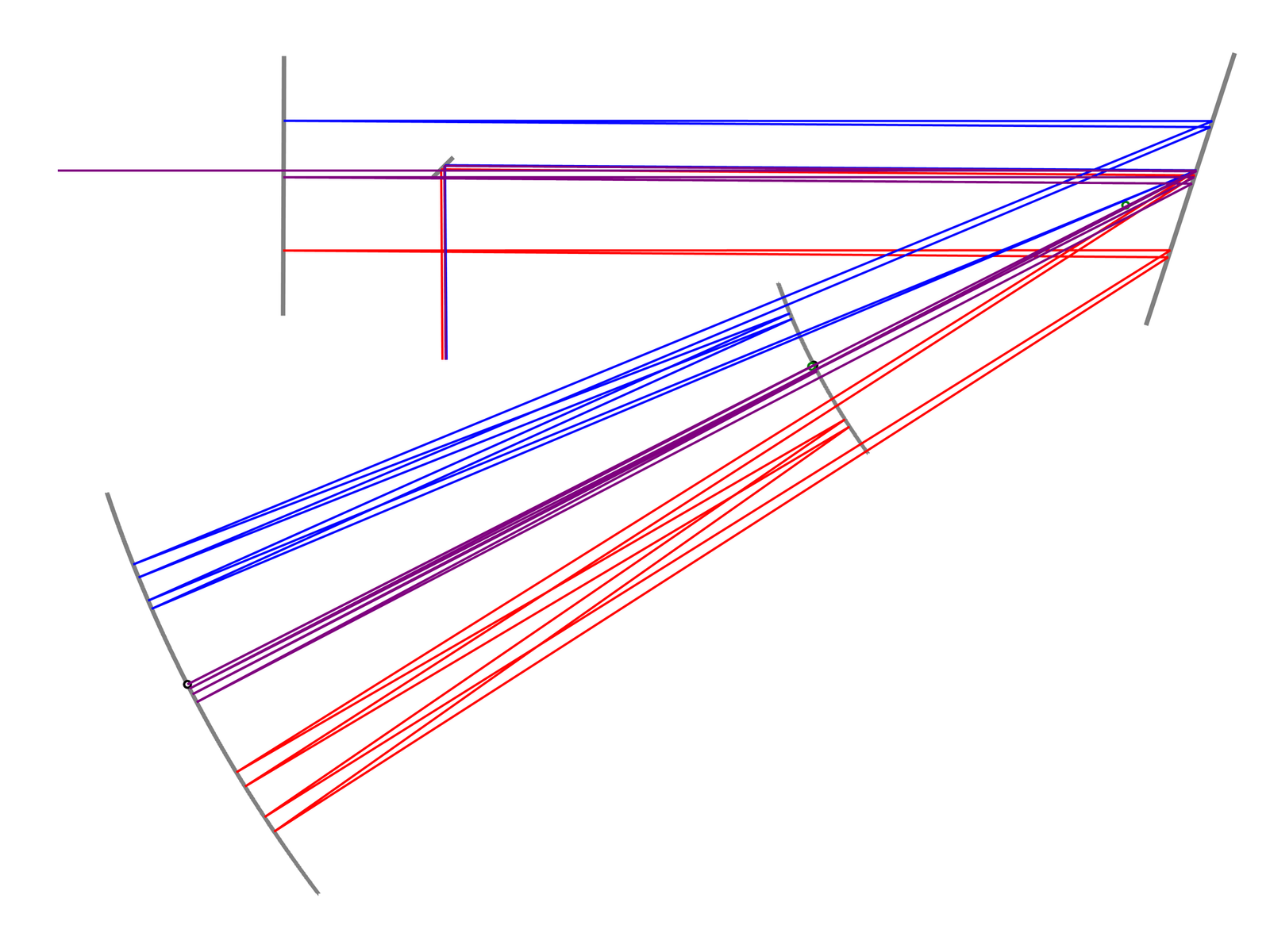
Ray-tracing beam path of a misaligned Offner stretcher for a sub-40 fs TW Ti:Sapphire CPA laser
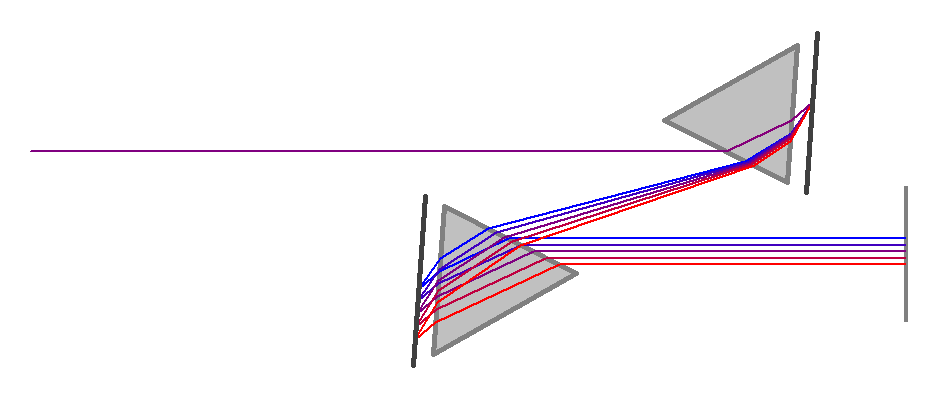
Grism compressor with a positive TOD/GDD ratio for a fiber CPA system at λ = 1 µm
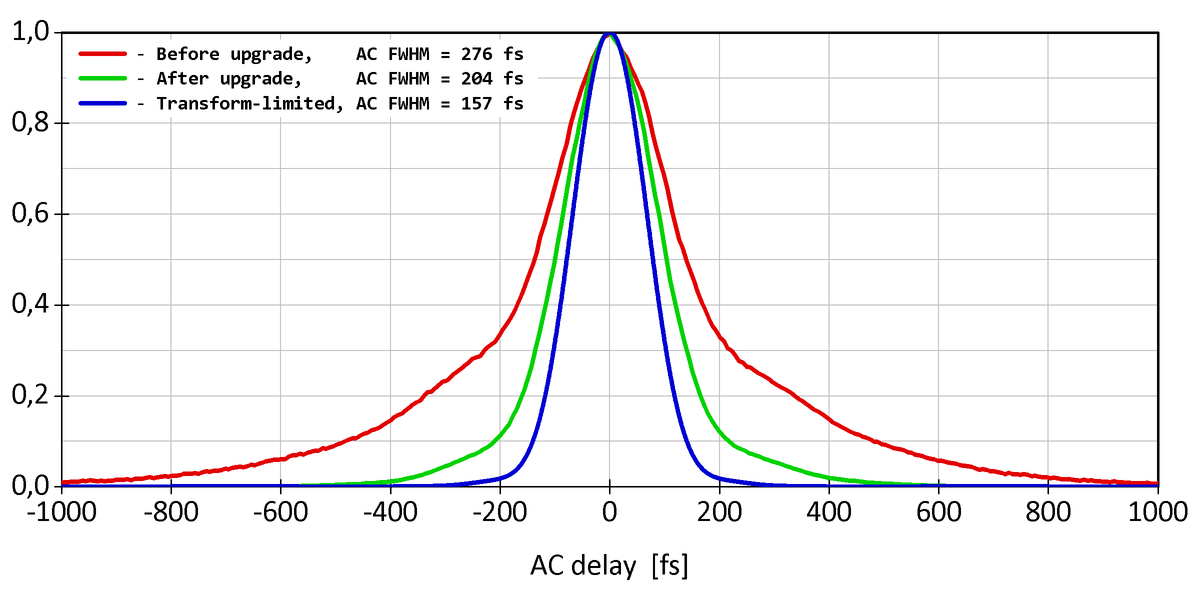
Pulses (autocorrelation functions) of a fiber CPA system after an upgrade of the dispersion-control sub-systems
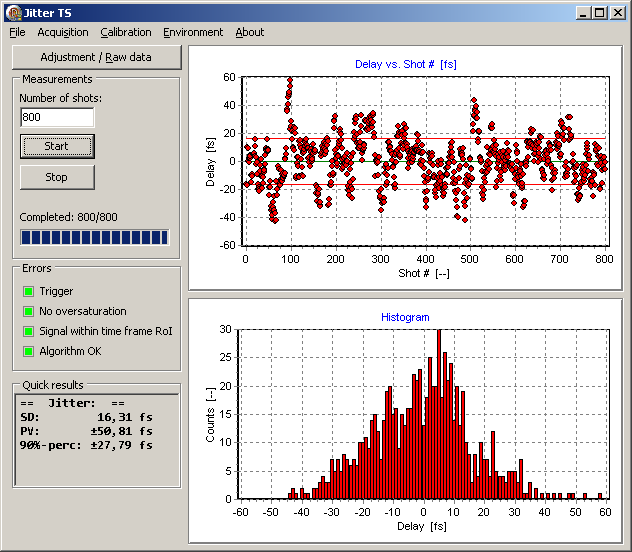
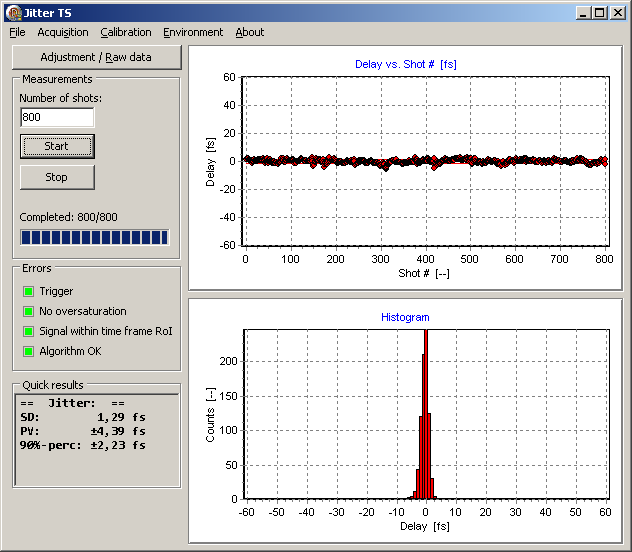
Sub-2 fs characterization of cross-jitter of two locked femtosecond CPA amplifiers
A custom instrument to measure the cross-jitter between two locked femtosecond lasers was developed. The images on the right demonstrate a sample measurement of the relative timing jitter between output pulses from two CPA systems (each delivers 42 fs pulses at 800 nm with millijoule-level energy at 10 Hz). The data indicates synchronization within ±17 fs (SD). The intrinsic noise of the instrument (i.e. the jitter introduced by the instrument itself, when it is seeded with two replicas of the same laser pulse) is ~1.5 fs, ensuring that measurements reflect the actual performance of the lasers.
Cross-jitter between two CPA lasers
Intrinsic noise of the instrument; <1.5 fs SD.
Mechanical engineering of a DPSS laser for LIBS/PIV applications
A complete mechanical design of a dual-cavity DPSS laser was developed. The optical head of the laser features a special geometry of the gain unit that supports either adding an external air-cooled heat sink or direct mounting of the optical head to the optical table. This allows integrating the laser optical head into larger machines of distinct architectures. The same design of the optical head can accommodate two different optical layouts for LIBS and PIV applications. The design is made to be compatible with the existing optical mounts from the client’s inventory.
Note: Certain components and geometries shown in the image have been modified or hidden to protect client intellectual property.
Optical head of the laser (certain elements are hidden)

Custom pulse pickers
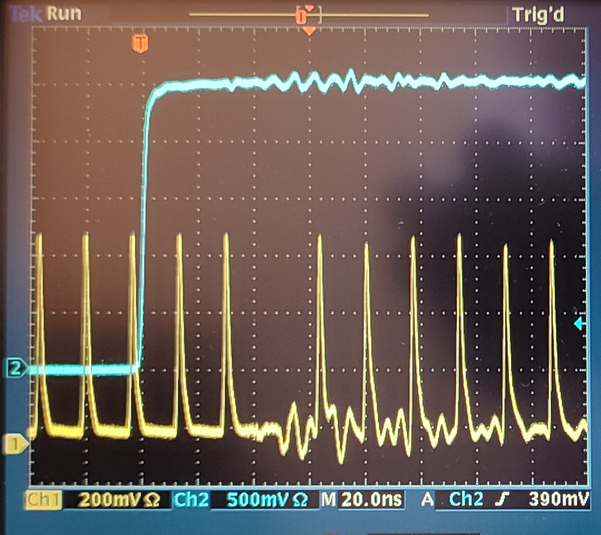
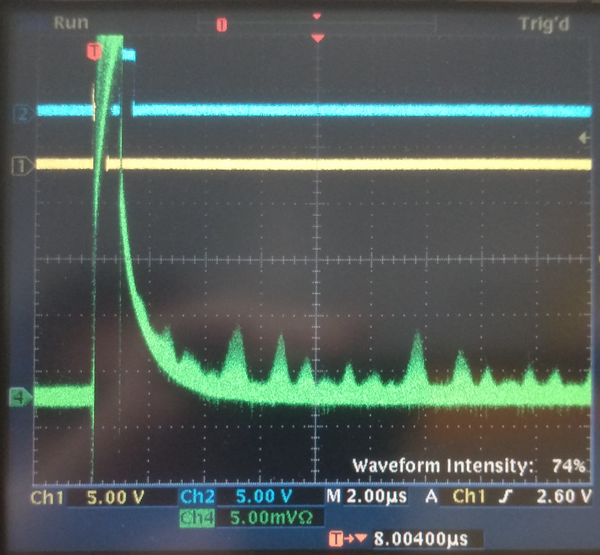
Our experience covers a wide variety of electro-optical pulse pickers based on DKDP, BBO, and RTP crystals and various high-voltage drivers. Examples on the right show oscilloscope traces from two different pulse pickers: (1) a pulse picker to extract single pulses, (2) an electro-optical unit for Q-switching / cavity dumping in a picosecond regenerative amplifier.
Single laser pulse extracted from the input sequence (dumped signal is shown)
Inspection of a Pockels cell for piezoelectric ringing in a pulse picker for cavity dumping
Simulation and characterization of femtosecond pulses
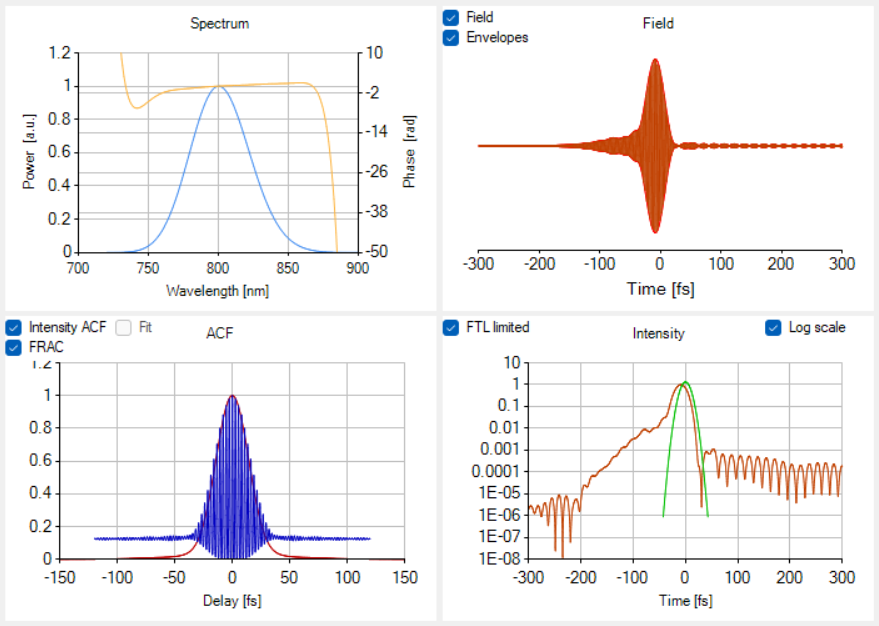
The quality of coatings, not just the substrates, is critical for generating short femtosecond pulses. A custom simulation tool was developed to model distortions of femtosecond pulses caused by optical coatings deviated from design specifications. An example on the right demonstrates significant pulse degradation caused by a coating run of questionable quality. Such distortions, being accumulated with each additional optical element in the laser, easily reach a level where they cannot be compensated. By identifying these defects at the inspection stage, the manufacturer and their customer were able to reject the whole batch before building the laser. A similar approach was applied to inspect the quality of large high-cost substrates for stretchers and compressors. A thoroughly designed inspection technology makes it possible to reject non-compliant substrates even before they are even sent for coating, not when you discover an awful pulse on the autocorrelator.
Femtosecond pulse degradation caused by out-of-specification optical coating
Beam profiler for large laser beams with complex structure
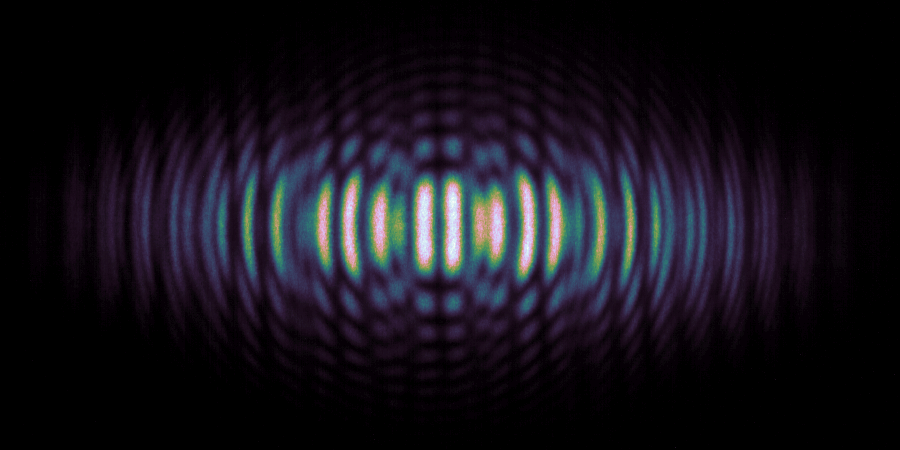
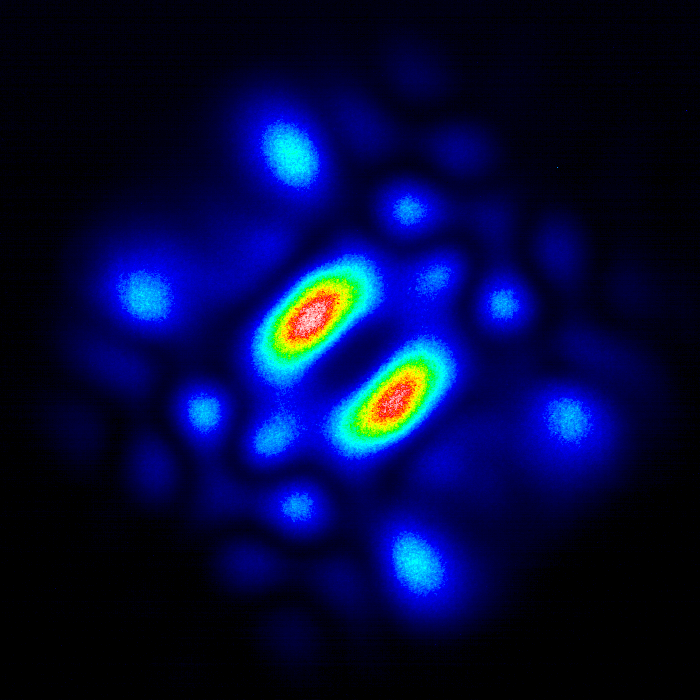
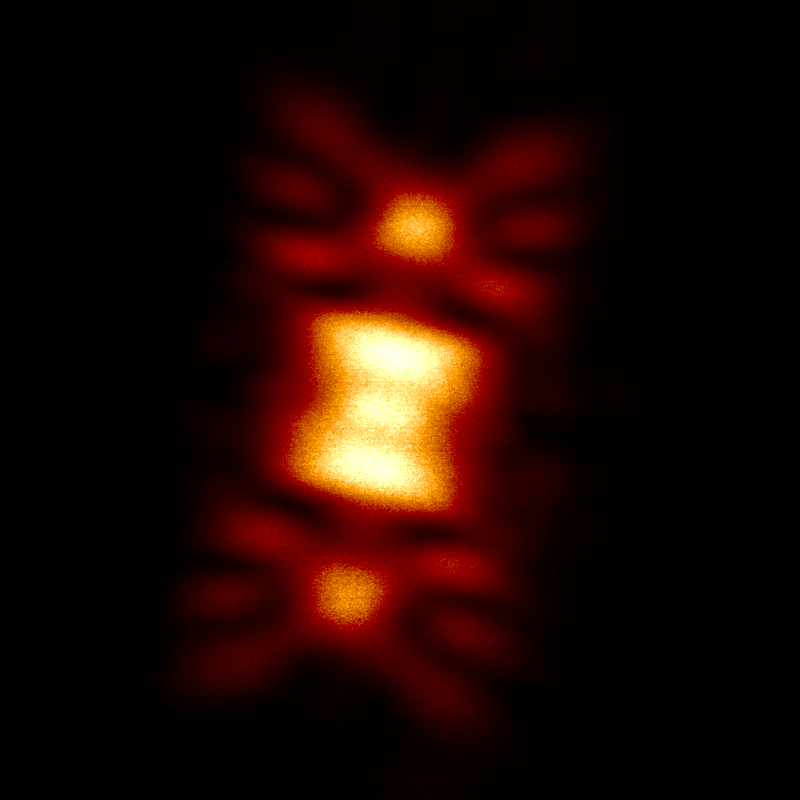
A custom beam profiler for laser beams with complex internal structure was developed. The instrument employs a relay-imaging configuration combined with a special averaging algorithm to eliminate speckle patterns caused by scattering on the input screen. The images on the right demonstrate measurements of actual laser beams. Note the total absence of interference-induced artifacts, which is rarely achieved with conventional CMOS-based beam profilers and allows one investigating coherent beams with complex multi-spot structure. Another application is measuring large-aperture beams of sub-TW and TW femtosecond lasers. Such lasers are designed to have large beam diameters to adapt to current LIDT limits of compressor gratings (typically a few hundreds of mJ/cm^2 for holographic gratings in Ti:Sapphire domain), and beam-delivery issues caused by small-scale self-focusing.
Examples of actual laser beams obtained with the beam profiler
Optimization of a laser amplifier with a cheap unstable pump source
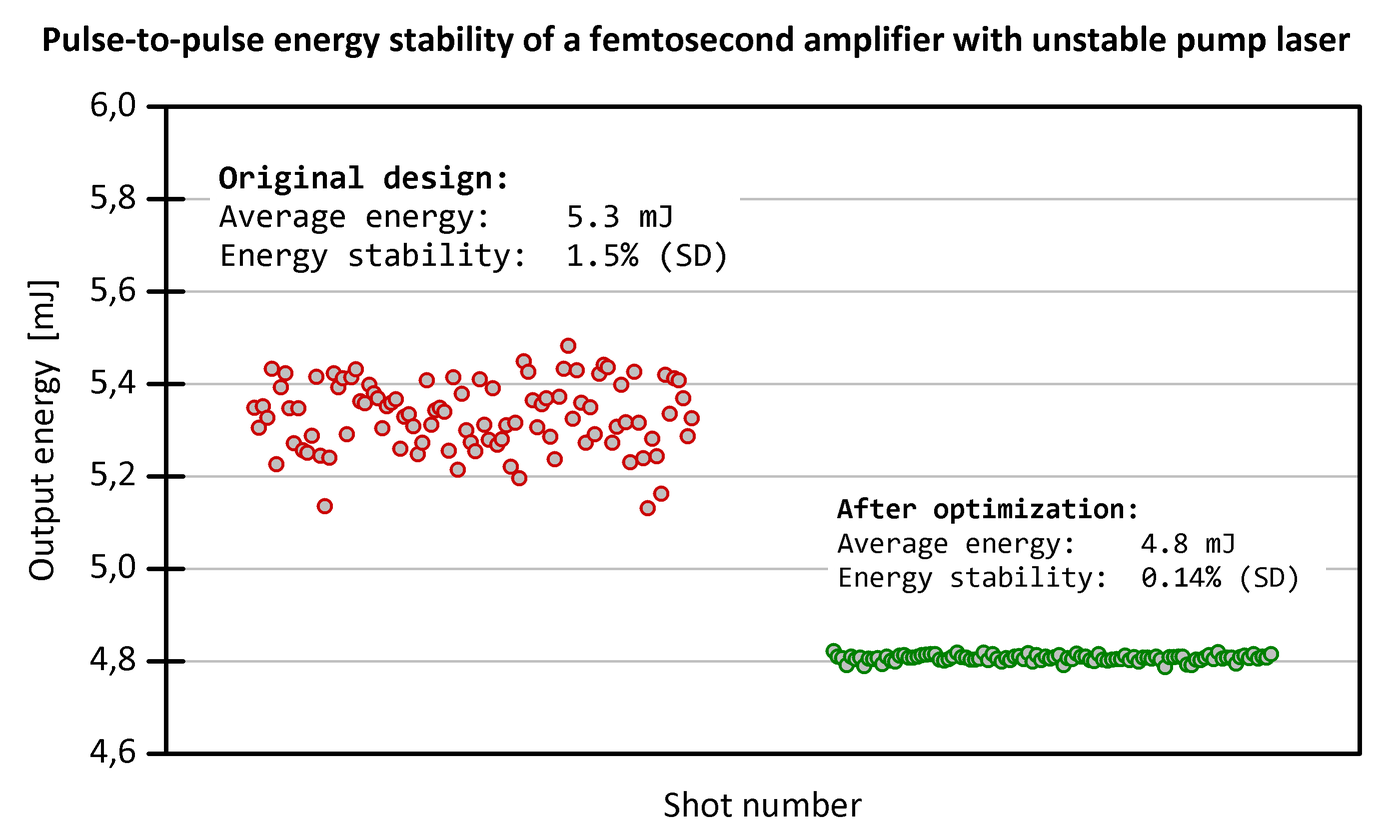
A commercial femtosecond amplifier was paired with a cheap pump laser that exhibited poor pulse-to-pulse stability in terms of both energy and beam pointing. The goal was to improve the performance of the amplifier with the existing unstable pump source. After optimization and some upgrade of the amplifier, the pulse-to-pulse energy stability of the system improved from 1.5% to 0.14% (SD). This tenfold improvement was achieved with a minimal 10% trade-off in the output energy.
Pulse-to-pulse energy stability: original vs. optimized
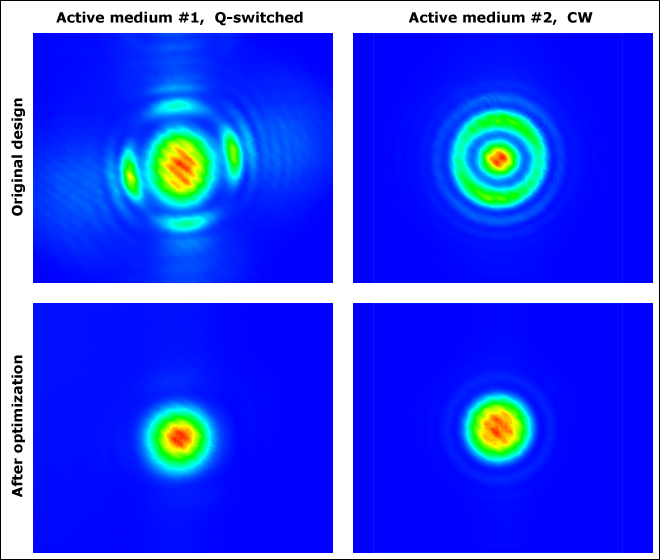
Beam quality of a Q-switched DPSS laser
A nanosecond Nd-doped diode-pumped Q-switched laser for resistor trimming had a poor beam quality. To address the beam quality problem, a special software tool was developed. The software implemented an advanced non-ABCD model to simulate formation of non-Gaussian multimode beams inside the laser cavity. Calibrated with experimental data, the model functioned as a virtual digital twin, allowing multiple numerical simulations. The software analyzed approximately 10000 combinations of laser parameters overnight to map their influence on the beam quality. The identified “good regions” with high beam quality were validated on the customer’s prototype, and the laser design was revised. The upgrade of the design resulted in an obvious improvement in the beam quality with good M2 across the entire range of operating repetition rates.
Measured beams for the original vs. optimized designs
Nonlinear dynamics and chaotic operation in solid-state lasers
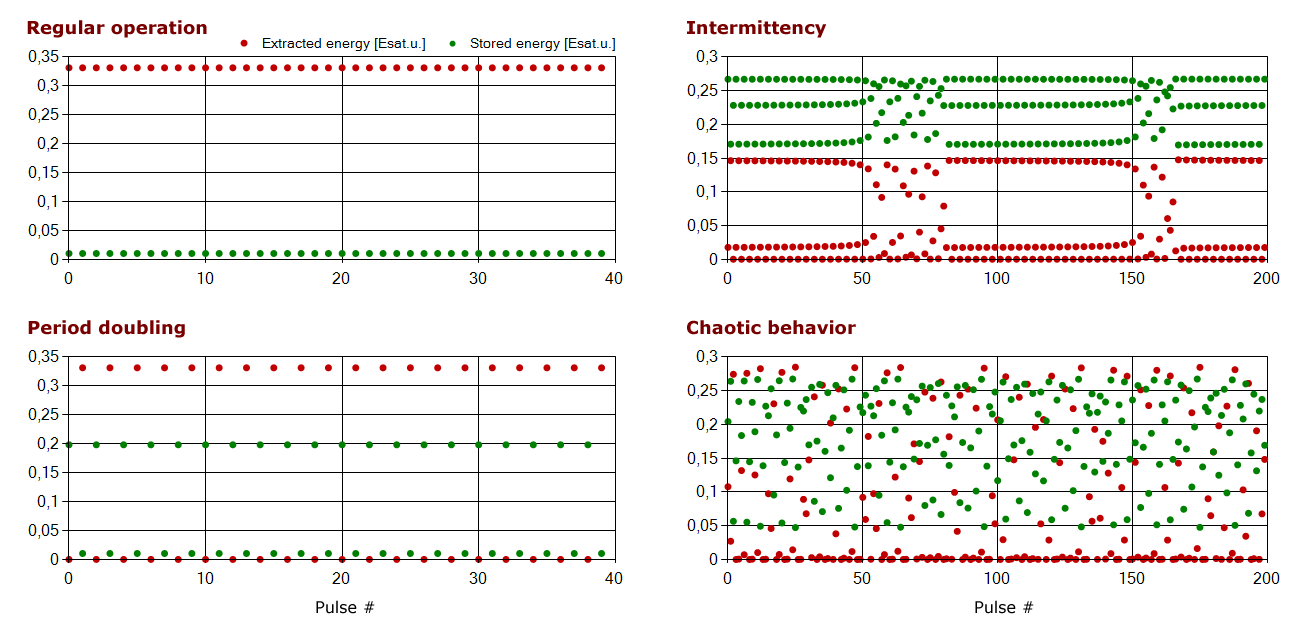
Conventional lasers are built to generate a stable train of pulses with constant energy. Under certain conditions, lasers can generate sequences of pulses with random energy originating from intrinsic nonlinear dynamics of class B lasers. Although chaotic behavior is usually undesirable for standard applications, it can also enable specialized niche applications. A numerical model was developed to investigate the feasibility of generating chaotic sequences of ultrashort pulses of sub-mJ level and ways to control those sequences.
Nonlinear dynamics of a class B laser
A few more examples
- Generation and pre-shaping of amplified femtosecond pulses with specific envelopes for calibration of instrument response function of a streak camera.
- Generation of multi-mode laser beams with multiple quasi-focal points for laser micromachining of holes with large aspect ratio.
- Precise measurement of chromatic dispersion of femtosecond laser amplifiers.
- Precise measurement of low-level losses of high-quality Pockels cells.
- Experimental setup for quality inspection of large-aperture optical substrates in terms of wavefront distortions.
- Designing a special non-ISO LIDT measurement instrument coupled with the real laser to evaluate R&D optics in the actual operational conditions.
- Advanced non-ABCD numerical models for non-gaussian beams and aberrated resonators.
- Software to simulate performance of chirped Bragg gratings at unstable temperature conditions.
- Algorithm for precise calculations of high-order dispersion terms of aberrated dispersive sub-systems in CPA lasers.
- Numerous software tools for simulations and data processing (data from streak cameras, beam profilers, microscopes, oscilloscopes).
- info@femtosecond.solutions
- +421 919 185657
- Bratislava, Slovakia